sipnity.com

Author name: dikshasangwan37@gmail.com

google ad vs social media ad

Google Ads vs Social Media Ads for Business: Which One Should You Choose?

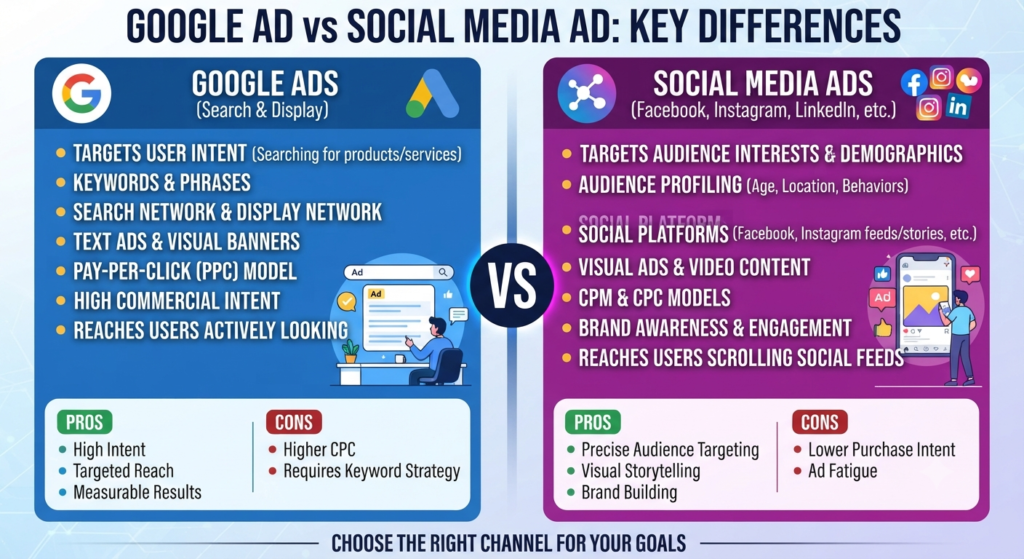
Google Ads vs Social Media Ads for Business: Which One Should You Choose? Introduction Digital advertising has become an important part of modern business growth. Businesses can use paid advertising to reach potential customers, generate leads, increase website traffic, and promote their products or services. Two popular advertising approaches are Google Ads and social media advertising. Understanding Google Ads vs Social Media Ads for Business can help businesses choose an advertising strategy based on their goals, audience, budget, and type of product or service. What Are Google Ads? Google Ads is an online advertising platform that allows businesses to display advertisements across Google’s advertising network. Search ads can appear when people search for products, services, or information related to specific keywords. For example, if someone searches for “digital marketing agency near me,” a relevant business may show an advertisement for its services. This makes Google Ads useful for reaching people who are already searching for something related to a business. What Are Social Media Ads? Social media ads are paid advertisements displayed on platforms such as Instagram and Facebook. Businesses can use different formats, including image ads, video ads, carousel ads, Stories, and Reels. Social media advertising can help businesses introduce their products or services to people based on available audience targeting options. It is particularly useful for visual content, brand awareness, engagement, and reaching potential customers who may not be actively searching for a product. Google Ads vs Social Media Ads for Business: Main Difference The key difference in Google Ads vs Social Media Ads for Business is user intent. Google Ads can reach users when they are actively searching for a product, service, or solution. Social media ads generally reach people while they are browsing social platforms and discovering content. For example, someone searching for “best website designing service” already has a specific need. On the other hand, someone scrolling through Instagram may discover a website designing service through an engaging advertisement even though they were not actively searching for one. Benefits of Google Ads for Businesses 1. Reaching High-Intent Customers Google Ads can help businesses reach people who are actively searching for relevant products or services. This can be valuable for businesses that want to capture existing demand. 2. Keyword-Based Targeting Businesses can target relevant search terms and keywords. Choosing appropriate keywords can help advertisements appear for searches that are connected to the business. 3. Measurable Results Google Ads provides performance data that can help businesses evaluate clicks, impressions, conversions, and other campaign metrics. This information can be used to optimize campaigns over time. Benefits of Social Media Ads for Businesses 1. Strong Visual Promotion Social media platforms are highly suitable for images and videos. Businesses can use creative content to demonstrate products, explain services, or tell their brand story. 2. Brand Awareness Social media advertising can help businesses introduce their brand to new audiences. Even when users are not actively searching for a product, an interesting advertisement can create awareness and curiosity. 3. Multiple Ad Formats Businesses can experiment with different formats such as videos, carousels, Stories, and Reels. This provides flexibility when creating campaigns for different marketing objectives. Google Ads vs Social Media Ads for Business: Which Is Better for Leads? The answer depends on the type of business and customer journey. Google Ads can be useful when potential customers are already searching for a solution. For example, service businesses such as digital marketing agencies, web designers, repair services, or professional consultants may benefit from search-based advertising. Social media ads can also generate leads, especially when businesses use attractive creative content and a clear call to action. Lead forms can make it easier for interested users to submit their contact details. Therefore, Google Ads vs Social Media Ads for Business should be considered based on the audience’s buying intent and the business’s lead-generation strategy. Which Is Better for Brand Awareness? Social media advertising can be useful for brand awareness because businesses can use engaging visual content to introduce their brand to a wider audience. For example, a clothing brand can use videos and product images to showcase its latest collection. A digital marketing agency can use educational content to demonstrate its expertise. Google Ads can also contribute to brand visibility, particularly when businesses appear for relevant searches. However, the advertising approach is generally more closely connected to what users are searching for. Budget Considerations Budget is another important factor when comparing Google Ads vs Social Media Ads for Business. The cost of advertising can vary significantly depending on factors such as industry, competition, audience, keywords, campaign objective, and ad quality. Businesses should avoid choosing a platform based only on the lowest possible cost. Instead, define a realistic budget, establish a clear objective, and track results. A small business can start with a controlled campaign and gradually adjust its budget based on performance. Can Businesses Use Both? Businesses do not always need to choose only one platform. Google Ads and social media advertising can work together as part of a broader digital marketing strategy. For example, a business can use social media ads to create awareness and introduce its products, while Google Ads can capture users who later search for the brand or related services. Using both platforms can help businesses reach customers at different stages of the buying journey. How to Choose the Right Advertising Platform When considering Google Ads vs Social Media Ads for Business, ask these questions: Answering these questions can help you select an advertising approach that matches your business goals. Conclusion Google Ads vs Social Media Ads for Business is not simply a choice between two advertising platforms. Each approach serves different purposes and can be useful at different stages of the customer journey. Google Ads can help businesses connect with users who are actively searching for relevant solutions, while social media ads can help businesses build awareness, engage audiences, and showcase products or services through creative content. The most effective approach depends on your business objectives, target audience, budget,
instagram marketing for business

Instagram Marketing for Business: A Complete Guide

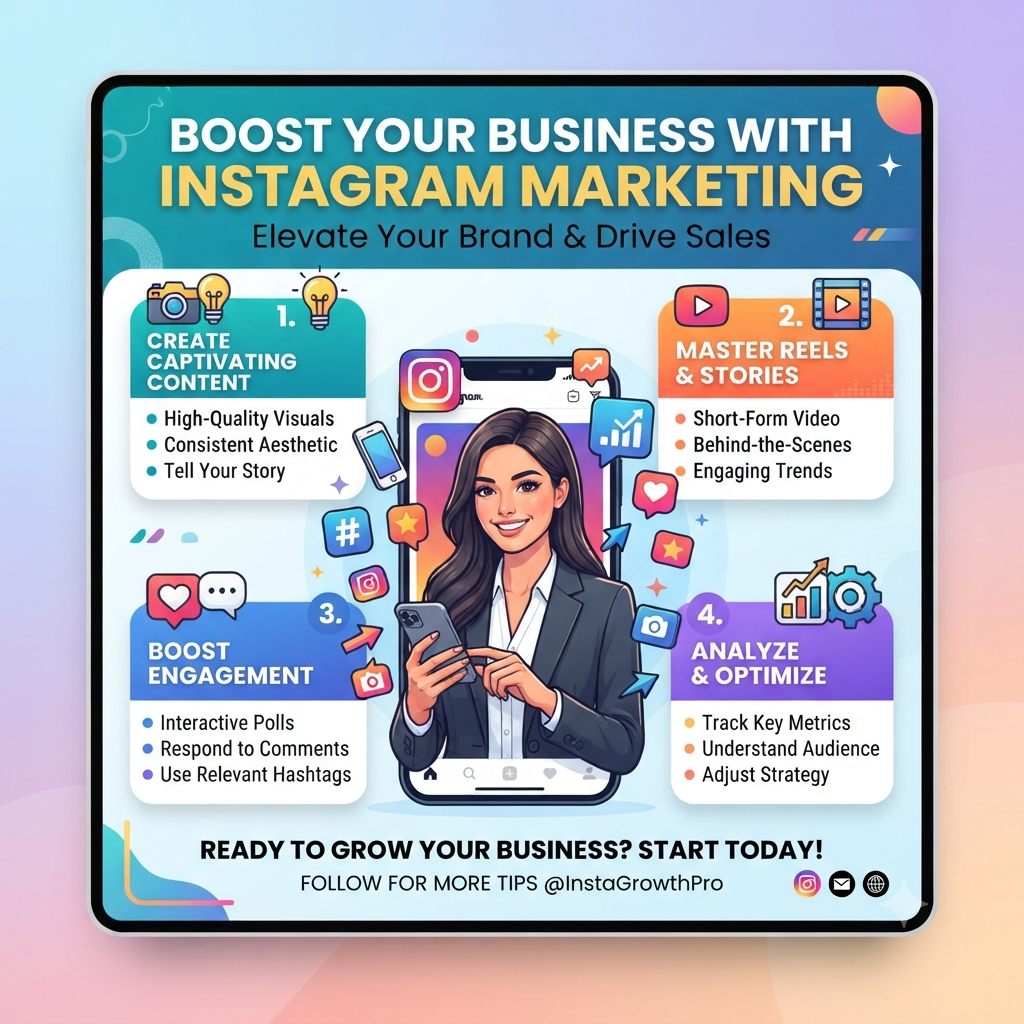
Instagram Marketing for Business: A Complete Guide Introduction In today’s digital world, having an online presence is important for businesses of every size. Instagram has become one of the most popular platforms for brands to showcase their products, connect with customers, and build awareness. Instagram Marketing for Business helps companies use Instagram strategically to reach their target audience and create meaningful relationships with potential customers. Whether you run a small business, startup, service-based company, or online store, Instagram can help you present your brand professionally and attract new customers. What Is Instagram Marketing for Business? Instagram Marketing for Business means using Instagram to promote a business, its products, services, and brand identity. It includes creating engaging posts, Reels, Stories, carousels, and other content to communicate with the target audience. Businesses can also use Instagram advertising, influencer collaborations, hashtags, and analytics to improve their marketing efforts. A consistent Instagram strategy can make your brand more visible and help customers understand what your business offers. Why Is Instagram Marketing Important for Businesses? Instagram provides businesses with a visual platform where they can communicate their brand in a simple and creative way. Customers can discover products and services through posts, Reels, Stories, and recommendations. One of the major benefits of Instagram Marketing for Business is brand awareness. Regularly publishing useful and attractive content can help people recognize your brand and remember your products or services. Instagram also provides opportunities for direct communication. Businesses can answer questions through comments and direct messages, helping them build stronger relationships with their audience. Create a Professional Instagram Business Profile The first step in Instagram Marketing for Business is creating a professional profile. Your profile should clearly explain who you are, what you offer, and how customers can contact you. Use a recognizable logo or professional profile picture. Write a short and informative bio that describes your business. Add your website link and relevant contact information so interested customers can easily take the next step. A professional profile creates a strong first impression and makes your business easier to discover. Create Valuable and Engaging Content Content is one of the most important parts of Instagram Marketing for Business. Your content should not only promote your products but also provide value to your audience. You can create educational posts, product demonstrations, customer testimonials, behind-the-scenes content, tips, FAQs, and industry-related information. Reels can be used for short educational or entertaining videos, while carousels are useful for sharing information in multiple slides. Try to maintain a consistent visual style, including similar fonts, layouts, and brand elements. This can help create a recognizable identity for your business. Use Instagram Reels and Stories Reels are an effective way to present short-form video content. Businesses can use Reels to demonstrate products, share quick tips, answer common questions, or introduce their team. Stories can be used for daily updates, polls, questions, offers, announcements, and behind-the-scenes content. Using different content formats can keep your audience interested and encourage regular interaction. For Instagram Marketing for Business, consistency is generally more useful than posting a large amount of content for a short period and then becoming inactive. Use Hashtags Strategically Hashtags can help organize and discover content on Instagram. Businesses can use relevant hashtags related to their industry, location, products, and target audience. Instead of using unrelated popular hashtags, focus on hashtags that accurately describe your content. For example, a digital marketing agency can use terms related to digital marketing, social media marketing, SEO, and online business. The goal should be to make your content relevant and discoverable rather than simply adding a large number of hashtags. Engage With Your Audience Successful Instagram Marketing for Business is not only about posting content. Engagement is equally important. Respond to comments, answer direct messages, ask questions, and encourage followers to share their opinions. You can also create interactive Stories using polls, quizzes, and question stickers. These activities can help you understand your audience better and make your followers feel connected to your brand. Building genuine relationships can turn followers into potential customers over time. Consider Instagram Advertising Organic content can help businesses build an audience, while Instagram advertising can help reach specific groups of people. Businesses can create advertisements based on factors such as location, interests, and other available audience characteristics. Before spending money on advertising, define your objective clearly. Your goal could be increasing website visits, generating leads, promoting a product, or increasing awareness. Start with a clear message and a strong call to action, then monitor the campaign results and make improvements based on performance. Track Your Instagram Performance Measuring results is an important part of Instagram Marketing for Business. Instagram provides insights that can help businesses understand how their content is performing. Pay attention to metrics such as reach, impressions, engagement, profile activity, website clicks, and other relevant actions. These insights can help you identify which types of content your audience responds to most. Use this information to improve your future content strategy instead of relying only on assumptions. Common Instagram Marketing Mistakes to Avoid Businesses often make mistakes such as posting inconsistently, using poor-quality visuals, ignoring comments, focusing only on sales, or failing to understand their target audience. Another common mistake is copying competitors without developing a unique brand identity. Your content should communicate your own values, expertise, products, and personality. Avoid making every post promotional. A balanced content strategy can include educational, entertaining, informative, and promotional content. Conclusion Instagram Marketing for Business can help businesses build brand awareness, connect with their target audience, showcase products and services, and generate opportunities for growth. A professional profile, consistent content, engaging Reels and Stories, relevant hashtags, audience interaction, advertising, and performance tracking can all contribute to an effective Instagram strategy. The key is to focus on your audience and provide content that is useful, relevant, and authentic. With a clear strategy and consistent effort, Instagram can become an important part of your overall digital marketing plan.

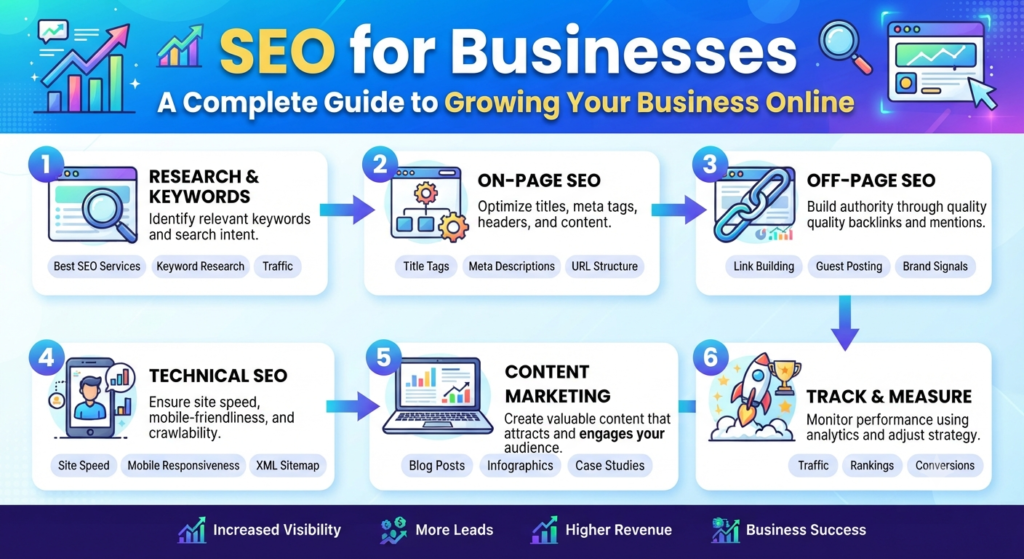
SEO for Businesses

SEO for Businesses: A Complete Guide to Growing Your Business Online

SEO for Businesses: A Complete Guide to Growing Your Business Online Introduction In today’s digital world, having an online presence is essential for every business. Customers increasingly use search engines to discover products, services, brands, and local businesses. This is why SEO for Businesses has become an important part of digital marketing. Search Engine Optimization, commonly known as SEO, helps a website appear higher in search engine results and makes it easier for potential customers to find a business online. Whether you own a small local shop, an e-commerce store, a startup, or a professional service company, SEO for Businesses can help you attract relevant visitors, build online visibility, and create long-term growth opportunities. What Is SEO for Businesses? SEO for Businesses refers to the process of optimizing a business website so that it can rank better on search engines such as Google. SEO involves improving website content, keywords, technical performance, page structure, backlinks, and user experience. When people search for something related to your business, you want your website to appear among the relevant results. A well-planned SEO strategy can help your website reach people who are already interested in the products or services you provide. Why Is SEO Important for Businesses? 1. Increases Online Visibility One of the biggest benefits of SEO for Businesses is improved online visibility. If your website appears on the first page of search results for relevant keywords, more potential customers can discover your brand. Higher visibility can help businesses compete with other companies in the same industry and reach customers without depending completely on paid advertising. 2. Brings Targeted Website Traffic SEO is not simply about getting more visitors. It is about attracting the right visitors. SEO for Businesses focuses on keywords that potential customers actually search for. For example, a digital marketing agency can target keywords related to social media marketing, website design, SEO services, and online advertising. Visitors searching for these terms are more likely to be interested in the services offered. 3. Builds Trust and Credibility Websites that consistently appear in search results can create a stronger sense of credibility among users. SEO for Businesses can support this credibility by improving website content, publishing useful blogs, earning quality backlinks, and creating a better user experience. A professional website with helpful information can make visitors more comfortable when considering a purchase or contacting a business. Key Elements of SEO for Businesses Keyword Research Keyword research is one of the foundations of SEO for Businesses. It involves finding the words and phrases that your target audience uses when searching online. Businesses should choose relevant keywords based on search intent, competition, and their products or services. Using specific long-tail keywords can also help attract a more targeted audience. On-Page SEO On-page SEO focuses on elements that can be improved directly on your website. These include page titles, headings, meta descriptions, URLs, images, internal links, and website content. Using keywords naturally throughout your content helps search engines understand what your page is about. However, keyword stuffing should be avoided because content should always be written primarily for readers. Technical SEO Technical SEO focuses on the technical performance of a website. Website speed, mobile responsiveness, secure HTTPS connections, crawlability, and proper website structure are important areas to consider. A technically optimized website makes it easier for search engines to crawl and understand your pages while also providing a better experience for visitors. Local SEO For businesses that serve a specific location, local SEO can be particularly valuable. SEO for Businesses can include optimizing a Google Business Profile, maintaining accurate business information, collecting genuine customer reviews, and creating location-specific content. Local SEO can help businesses become more visible when customers search for nearby products or services. Content Marketing and SEO High-quality content plays an important role in SEO for Businesses. Businesses can create blogs, guides, FAQs, service pages, case studies, and other useful resources to answer customer questions. Regularly publishing helpful content can increase the number of keywords a website ranks for and provide more opportunities to attract organic traffic. Good content should be original, informative, easy to read, and relevant to the target audience. How SEO Helps Long-Term Business Growth Unlike many short-term marketing activities, SEO for Businesses can provide long-term benefits when maintained consistently. A well-optimized page can continue attracting organic visitors months after it is published. SEO can also reduce dependence on paid advertising for every website visit. While SEO requires time, effort, and regular improvements, it can become an important part of a sustainable digital marketing strategy. Common SEO Mistakes Businesses Should Avoid Businesses sometimes make SEO mistakes such as using too many keywords, copying content, ignoring mobile users, having slow-loading pages, creating low-quality backlinks, or publishing content without understanding search intent. Another common mistake is expecting immediate results. SEO for Businesses usually requires consistent work, monitoring, testing, and optimization. Search rankings can change over time, so businesses should regularly review their SEO performance. Measuring SEO Performance To understand whether SEO for Businesses is working, companies should monitor important metrics such as organic traffic, keyword rankings, impressions, clicks, engagement, leads, and conversions. Tools such as Google Search Console and Google Analytics can help businesses understand how users discover and interact with their websites. Tracking these metrics allows marketers to identify successful strategies and areas that need improvement. Conclusion SEO for Businesses is an important digital marketing strategy for companies that want to improve their online presence and attract potential customers through search engines. From keyword research and quality content to technical optimization and local SEO, every element can contribute to better search visibility. Businesses should focus on creating useful content, providing a positive website experience, targeting relevant keywords, and consistently improving their SEO strategy. With patience and regular optimization, SEO for Businesses can help create stronger online visibility, attract targeted traffic, and support sustainable business growth.

social media marketing

social media marketing

Social Media Marketing: A Complete Guide for Business Growth Introduction In today’s digital world, having an online presence is essential for every business. Customers spend a significant amount of time on platforms such as Instagram, Facebook, LinkedIn, and YouTube. This is where social media marketing helps businesses connect with their target audience, build brand awareness, and generate potential customers. Whether you own a small business, startup, personal brand, or established company, a proper social media marketing strategy can help you reach the right people and create meaningful relationships with your audience. What Is Social Media Marketing? Social media marketing is the process of promoting a business, product, or service through social media platforms. It includes creating useful content, sharing posts, engaging with followers, running advertisements, and analyzing performance. The main goal is not simply to post content every day. A successful strategy focuses on reaching the right audience with the right message at the right time. For example, a fashion brand can use Instagram to showcase products, while a professional service provider can use LinkedIn to share industry knowledge and attract potential clients. Why Is Social Media Marketing Important? 1. Builds Brand Awareness One of the biggest advantages of social media marketing is increased brand visibility. Regular and valuable content helps people recognize your brand and understand what your business offers. When users repeatedly see your brand online, they are more likely to remember it when they need your product or service. 2. Helps Reach the Target Audience Social media platforms provide businesses with opportunities to reach specific audiences based on interests, location, age, behavior, and other factors. This makes social media marketing useful for both local businesses and companies targeting customers across different cities or countries. 3. Increases Customer Engagement Social media allows businesses to communicate directly with their customers. Comments, messages, polls, stories, and live videos can create two-way communication. Instead of simply advertising a product, businesses can answer questions, collect feedback, and understand what their customers actually need. Popular Social Media Platforms for Businesses Instagram Instagram is highly visual and is useful for businesses that want to showcase products, services, designs, videos, and customer experiences. Reels, Stories, carousels, and posts can all be included in a content strategy. Facebook Facebook remains useful for building communities, sharing updates, running advertisements, and reaching different customer groups. Businesses can also use Facebook Pages and Groups to maintain regular communication with their audience. LinkedIn LinkedIn is particularly useful for B2B businesses, professionals, agencies, and service providers. Businesses can share industry insights, company updates, case studies, and professional content. YouTube YouTube allows businesses to create long-form and short-form video content. Tutorials, product demonstrations, educational videos, and customer-focused content can help establish credibility. How to Create an Effective Social Media Marketing Strategy Define Your Goals Before creating content, decide what you want to achieve. Your goal could be increasing brand awareness, generating leads, driving website traffic, increasing engagement, or improving sales. Clear goals make it easier to measure the success of your social media marketing efforts. Understand Your Audience Knowing your audience is extremely important. Identify their interests, problems, preferences, and online behavior. This information helps you create content that is relevant and useful. Create a Content Calendar A content calendar helps businesses organize posts in advance. You can plan educational posts, promotional content, customer testimonials, behind-the-scenes videos, reels, and festive posts. Consistency is important because regularly appearing on social media keeps your brand visible. Use Different Types of Content Avoid posting the same type of content repeatedly. Use a combination of images, videos, reels, carousels, stories, polls, and educational posts. A balanced content strategy can make your profile more interesting and encourage followers to interact with your brand. Measure Your Results An important part of social media marketing is tracking performance. Businesses should monitor metrics such as reach, impressions, engagement, followers, website clicks, leads, and conversions. These insights can show which types of content are performing well and where improvements are needed. Instead of relying on assumptions, businesses can use actual data to make better marketing decisions. Common Mistakes to Avoid Many businesses make the mistake of focusing only on selling. Social media users generally respond better when brands provide useful, entertaining, or educational content along with promotional posts. Another common mistake is inconsistency. Posting frequently for a few days and then disappearing for weeks can make it difficult to build a strong audience. Ignoring comments and messages is another problem. Social media is about communication, so businesses should make an effort to respond to their audience. Conclusion Social media marketing has become an important part of modern digital business. It gives businesses the opportunity to increase visibility, communicate with customers, build trust, and promote their products or services. A successful strategy requires clear goals, audience research, consistent content, creative ideas, and regular performance analysis. Businesses that use social media strategically can create a stronger online presence and develop long-term relationships with their audience. If you are ready to grow your business online, starting with a clear and consistent social media marketing strategy can be an important first step.

digital marketing strategy
digital marketing

Digital Marketing

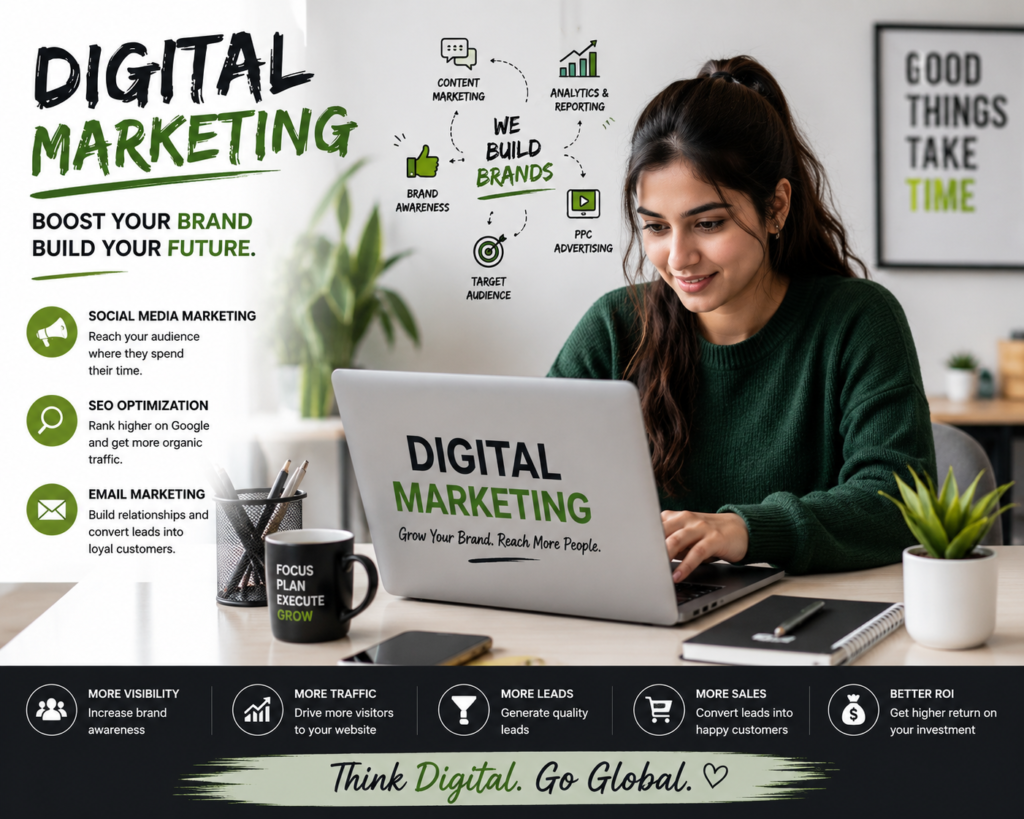
What Is Digital Marketing? Digital marketing is the process of promoting products, services, or brands through digital channels such as search engines, websites, social media, email, mobile apps, and online advertising. It helps businesses connect with potential customers, build brand awareness, generate leads, and achieve their marketing goals. Unlike traditional marketing methods such as television, newspapers, radio, and print advertising, digital marketing allows businesses to reach specific audiences and measure their results more accurately. From a small local business to a large international company, digital marketing can support business growth and customer engagement. Why Is Digital Marketing Important for Businesses? The internet has changed the way people search for information, compare products, and make purchasing decisions. Customers now spend a significant amount of time online, making a strong digital presence essential for businesses. With digital marketing, companies can communicate with their target audience at different stages of the buying journey. Businesses can attract new customers through search engines, engage followers on social media, and build relationships through email marketing. Another major advantage is that businesses can track important metrics such as website visits, clicks, engagement, leads, conversions, and return on investment. B2B vs. B2C Digital Marketing The digital marketing strategy a company uses often depends on whether it sells to businesses or consumers. B2B Marketing Business-to-business (B2B) marketing usually involves longer decision-making processes and multiple people. Therefore, B2B companies should focus on building trust, providing useful information, and developing long-term relationships. B2C Marketing Business-to-consumer (B2C) marketing generally has a shorter buying process. Customers often respond to simple, attractive, and emotionally engaging messages that encourage them to take quick action. Major Types of Digital Marketing There are several important channels businesses can use to build their online presence. Choosing the right combination depends on the target audience, business goals, and available budget. 1. Search Engine Optimization (SEO) SEO involves optimizing a website and its content so that it can appear higher in search engine resu lts. Effective SEO includes keyword research, quality content, technical optimization, and link building. SEO is an important part of digital marketing because it can help businesses attract people who are already searching for relevant products or services. 2. Content Marketing Content marketing focuses on creating useful and valuable information for an audience rather than directly promoting a product. Blog posts, videos, guides, newsletters, podcasts, and infographics are common examples. High-quality content can establish a business as a trusted source of information and help attract potential customers. 3. Social Media Marketing Social media platforms such as Instagram, Facebook, YouTube, TikTok, and LinkedIn allow businesses to communicate directly with their audiences. Social media marketing can increase brand awareness, encourage engagement, promote products, and build customer relationships. Consistent posting and valuable content are important for long-term results. 4. Pay-Per-Click Advertising Pay-per-click (PPC) advertising allows businesses to display paid advertisements and pay when users interact with or click on the ads, depending on the campaign model. Platforms such as Google Ads and social media advertising platforms can help businesses reach highly targeted audiences and generate traffic or leads quickly. 5. Email and Mobile Marketing Email marketing allows businesses to communicate directly with customers through newsletters, promotional offers, welcome emails, and follow-ups. Mobile marketing can include SMS messages, mobile advertisements, and other communications designed for smartphone users. These channels can help businesses maintain relationships with existing customers. Benefits of Digital Marketing One of the biggest benefits of digital marketing is its ability to reach a large audience without requiring the same level of investment as many traditional marketing channels. Wider Reach Businesses can reach customers beyond their local area and connect with audiences across different cities, countries, and markets. Cost Effectiveness Digital channels can offer flexible budgets, making them suitable for both small businesses and large organizations. Companies can adjust their campaigns according to performance and available resources. Measurable Results Businesses can monitor impressions, clicks, website traffic, engagement, leads, conversions, and other performance indicators. This data helps marketers understand what is working and where improvements are needed. Better Personalization Because digital campaigns generate useful audience data, businesses can create more personalized messages based on factors such as interests, demographics, behavior, and previous interactions. How to Create an Effective Digital Marketing Strategy A successful digital marketing strategy starts with clearly defined goals. Businesses should determine whether they want to increase brand awareness, generate leads, drive website traffic, increase sales, or improve customer retention. Next, identify the target audience and understand their needs, interests, problems, and online behavior. After that, select the most suitable marketing channels and create a realistic budget. Businesses should also ensure that their websites and digital content are mobile-friendly. Since many customers access the internet through smartphones, a poor mobile experience can result in lost opportunities. Finally, continuously monitor campaign performance and make improvements based on data. Digital marketing is an ongoing process, so strategies should evolve as customer behavior, technology, and market trends change. Challenges of Digital Marketing Although digital marketing provides many opportunities, it also comes with challenges. Search engine and social media algorithms frequently change, increasing competition for online visibility. Data privacy is another important concern. Businesses must handle customer information responsibly and follow applicable privacy regulations. Measuring the exact return on investment can also be difficult, especially for strategies that produce results over a longer period. Building customer trust is equally important. Businesses need to provide authentic, useful, and consistent content to stand out in a crowded digital environment. Conclusion Digital marketing has become an essential part of modern business growth. It enables companies to reach targeted audiences, communicate with customers, measure performance, and improve their marketing strategies using data. From SEO and content marketing to social media, PPC, email, and mobile marketing, businesses have many channels to choose from. The key to success is selecting the right channels, understanding the target audience, setting measurable goals, and continuously optimizing campaigns. With a well-planned digital marketing strategy, businesses can strengthen their online presence, attract new customers, build lasting relationships, and achieve sustainable growth. About Us

Scroll to Top