
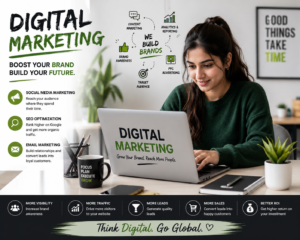
Digital Marketing
What Is Digital Marketing? Digital marketing is the process of promoting products, services, or brands through digital channels such as search engines, websites, social media, email, mobile apps, and online advertising. It helps businesses connect with potential customers, build brand awareness, generate leads, and achieve their marketing goals. Unlike traditional marketing methods such as television, newspapers, radio, and print advertising, digital marketing allows businesses to reach specific audiences and measure their results more accurately. From a small local business to a large international company, digital marketing can support business growth and customer engagement. Why Is Digital Marketing Important for Businesses? The internet has changed the way people search for information, compare products, and make purchasing decisions. Customers now spend a significant amount of time online, making a strong digital presence essential for businesses. With digital marketing, companies can communicate with their target audience at different stages of the buying journey. Businesses can attract new customers through search engines, engage followers on social media, and build relationships through email marketing. Another major advantage is that businesses can track important metrics such as website visits, clicks, engagement, leads, conversions, and return on investment. B2B vs. B2C Digital Marketing The digital marketing strategy a company uses often depends on whether it sells to businesses or consumers. B2B Marketing Business-to-business (B2B) marketing usually involves longer decision-making processes and multiple people. Therefore, B2B companies should focus on building trust, providing useful information, and developing long-term relationships. B2C Marketing Business-to-consumer (B2C) marketing generally has a shorter buying process. Customers often respond to simple, attractive, and emotionally engaging messages that encourage them to take quick action. Major Types of Digital Marketing There are several important channels businesses can use to build their online presence. Choosing the right combination depends on the target audience, business goals, and available budget. 1. Search Engine Optimization (SEO) SEO involves optimizing a website and its content so that it can appear higher in search engine resu lts. Effective SEO includes keyword research, quality content, technical optimization, and link building. SEO is an important part of digital marketing because it can help businesses attract people who are already searching for relevant products or services. 2. Content Marketing Content marketing focuses on creating useful and valuable information for an audience rather than directly promoting a product. Blog posts, videos, guides, newsletters, podcasts, and infographics are common examples. High-quality content can establish a business as a trusted source of information and help attract potential customers. 3. Social Media Marketing Social media platforms such as Instagram, Facebook, YouTube, TikTok, and LinkedIn allow businesses to communicate directly with their audiences. Social media marketing can increase brand awareness, encourage engagement, promote products, and build customer relationships. Consistent posting and valuable content are important for long-term results. 4. Pay-Per-Click Advertising Pay-per-click (PPC) advertising allows businesses to display paid advertisements and pay when users interact with or click on the ads, depending on the campaign model. Platforms such as Google Ads and social media advertising platforms can help businesses reach highly targeted audiences and generate traffic or leads quickly. 5. Email and Mobile Marketing Email marketing allows businesses to communicate directly with customers through newsletters, promotional offers, welcome emails, and follow-ups. Mobile marketing can include SMS messages, mobile advertisements, and other communications designed for smartphone users. These channels can help businesses maintain relationships with existing customers. Benefits of Digital Marketing One of the biggest benefits of digital marketing is its ability to reach a large audience without requiring the same level of investment as many traditional marketing channels. Wider Reach Businesses can reach customers beyond their local area and connect with audiences across different cities, countries, and markets. Cost Effectiveness Digital channels can offer flexible budgets, making them suitable for both small businesses and large organizations. Companies can adjust their campaigns according to performance and available resources. Measurable Results Businesses can monitor impressions, clicks, website traffic, engagement, leads, conversions, and other performance indicators. This data helps marketers understand what is working and where improvements are needed. Better Personalization Because digital campaigns generate useful audience data, businesses can create more personalized messages based on factors such as interests, demographics, behavior, and previous interactions. How to Create an Effective Digital Marketing Strategy A successful digital marketing strategy starts with clearly defined goals. Businesses should determine whether they want to increase brand awareness, generate leads, drive website traffic, increase sales, or improve customer retention. Next, identify the target audience and understand their needs, interests, problems, and online behavior. After that, select the most suitable marketing channels and create a realistic budget. Businesses should also ensure that their websites and digital content are mobile-friendly. Since many customers access the internet through smartphones, a poor mobile experience can result in lost opportunities. Finally, continuously monitor campaign performance and make improvements based on data. Digital marketing is an ongoing process, so strategies should evolve as customer behavior, technology, and market trends change. Challenges of Digital Marketing Although digital marketing provides many opportunities, it also comes with challenges. Search engine and social media algorithms frequently change, increasing competition for online visibility. Data privacy is another important concern. Businesses must handle customer information responsibly and follow applicable privacy regulations. Measuring the exact return on investment can also be difficult, especially for strategies that produce results over a longer period. Building customer trust is equally important. Businesses need to provide authentic, useful, and consistent content to stand out in a crowded digital environment. Conclusion Digital marketing has become an essential part of modern business growth. It enables companies to reach targeted audiences, communicate with customers, measure performance, and improve their marketing strategies using data. From SEO and content marketing to social media, PPC, email, and mobile marketing, businesses have many channels to choose from. The key to success is selecting the right channels, understanding the target audience, setting measurable goals, and continuously optimizing campaigns. With a well-planned digital marketing strategy, businesses can strengthen their online presence, attract new customers, build lasting relationships, and achieve sustainable growth. About Us
Hello world!
Welcome to WordPress. This is your first post. Edit or delete it, then start writing!